
Capability Concept
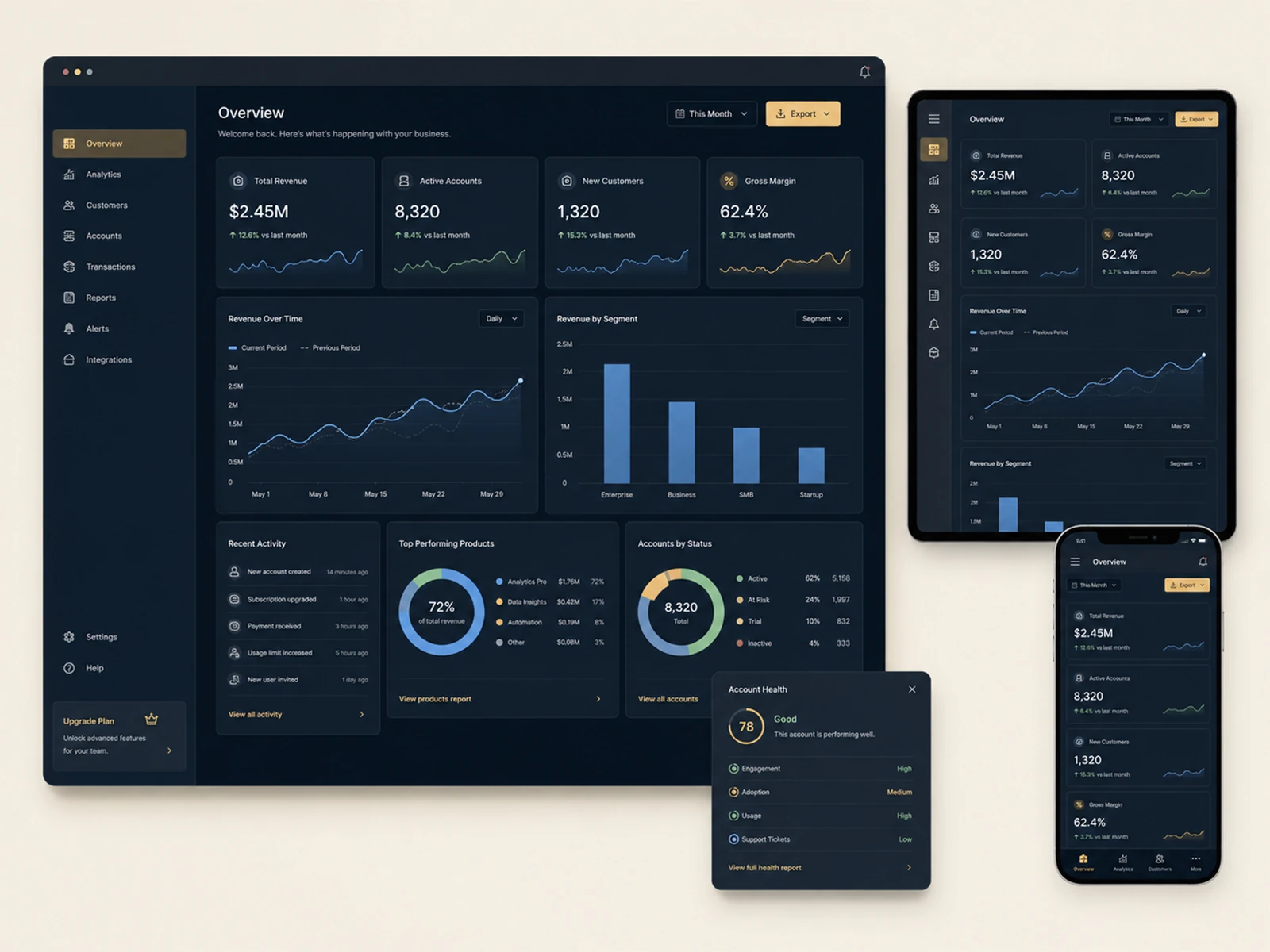
SaaS Analytics Dashboard
A responsive analytics experience designed around clear information hierarchy, reusable components and confident decision-making across desktop, tablet and mobile.
UI/UX Design for Digital Products
Elite Visuale designs SaaS platforms, dashboards, portals and digital-product experiences that help users understand tasks faster, move through workflows confidently and interact with greater consistency.
UX strategy, user journeys, wireframes, prototypes, design systems and frontend-ready interface specifications.
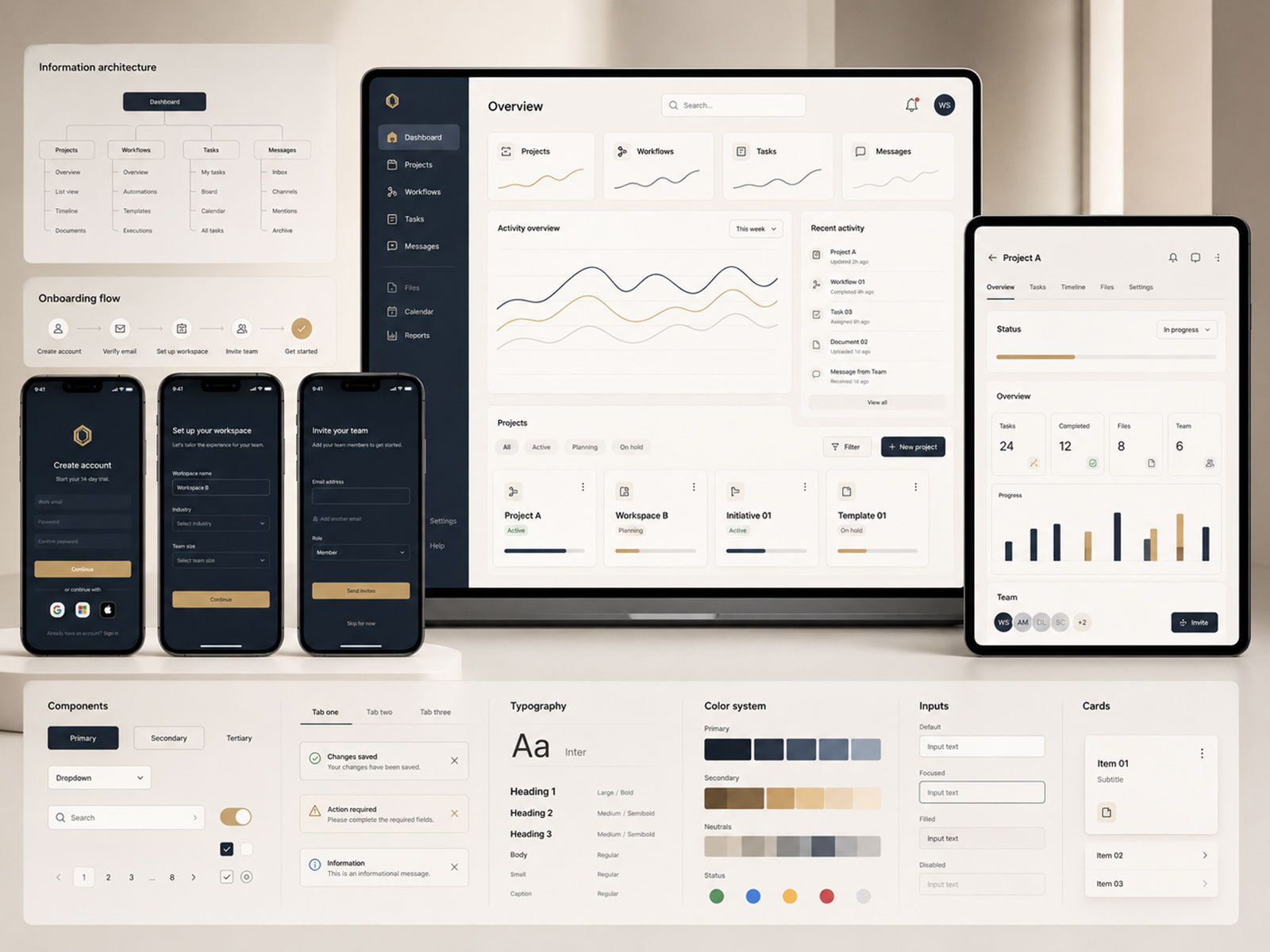
A clear interface is not only visually refined. It should help users understand what to do, complete important tasks and move through complex workflows without unnecessary friction.
Elite Visuale brings product thinking, UX structure, interface design and frontend readiness into one coordinated process—reducing the gap between approved designs and the live product experience. For Finland SaaS and technology companies, we also apply the interface discipline discussed in our journal on minimalism in modern design.
Common Challenges
Product teams usually approach us when users struggle to complete key workflows, interfaces feel inconsistent, or design and live product behaviour start to diverge.
Users struggle to understand navigation or next steps
Important workflows require too many actions
Dashboards prioritise the wrong information
Components behave inconsistently across screens
Responsive states are incomplete or unclear
Empty, error, loading and success states are missing
The design system no longer matches the live product
Product teams lack reusable interface patterns
New features increase visual and interaction inconsistency
Handoff files are difficult for frontend teams to interpret
Final deliverables depend on product type, workflow count, research depth, platforms and whether frontend implementation support is included. React and Angular readiness language describes implementation preparation — not a requirement that every engagement uses those frameworks.
Clarify the product, users, business goals, workflows, constraints and current friction.
Establish priorities, product journeys, information architecture and success criteria.
Create task flows, screen relationships, navigation logic and key interaction states.
Develop wireframes, responsive interfaces, prototypes and reusable components.
Review usability, consistency, accessibility considerations and product-team feedback.
Prepare frontend-ready specifications, review implementation and provide agreed design QA or refinement support.
Clearer product understanding
Faster task completion
More consistent workflows
Stronger responsive behaviour
Fewer interface inconsistencies
Improved design-system adoption
Better alignment between design and implementation
More reusable component patterns
Clearer product-team decision-making
More maintainable interface systems
Product UI/UX Concepts
A focused set of interface concepts demonstrating dashboard design, customer workflows and frontend-ready product systems.
Capability Concept
A responsive analytics experience designed around clear information hierarchy, reusable components and confident decision-making across desktop, tablet and mobile.
Capability Concept
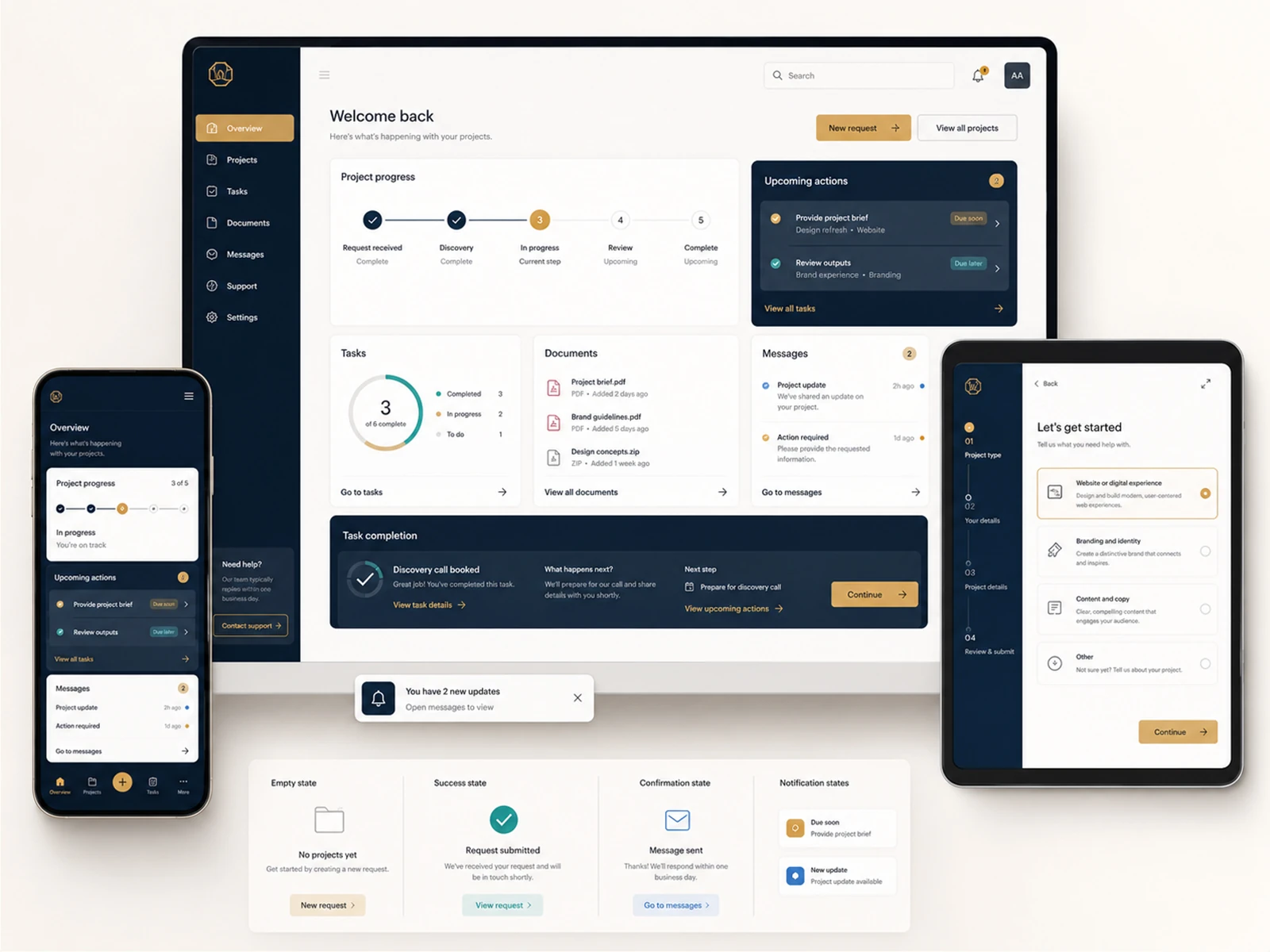
A multi-device customer portal concept with project tracking, tasks, documents, messages and guided workflow states designed to reduce friction.
Capability Concept
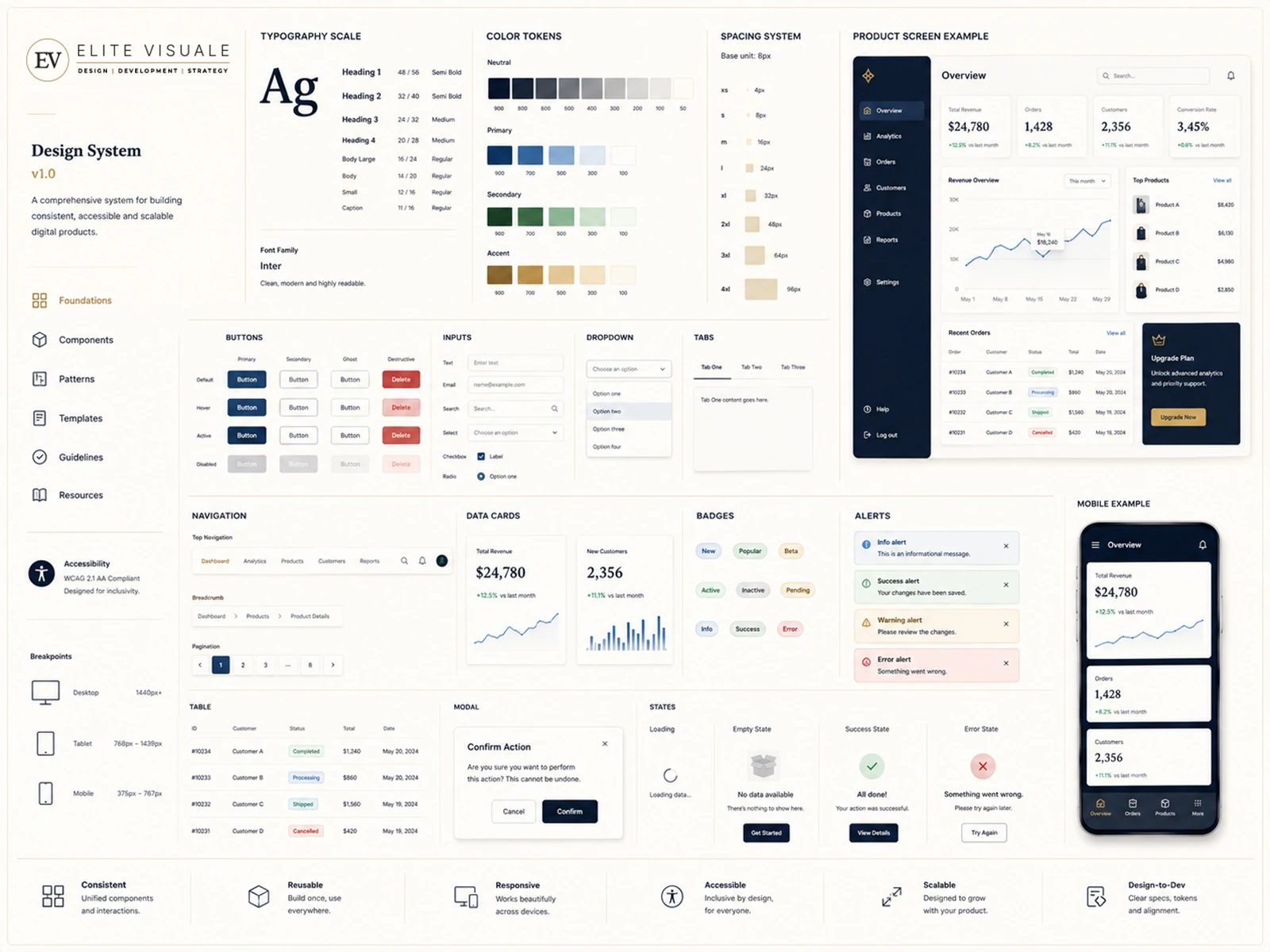
A structured component library covering tokens, controls, navigation, data patterns, system states and responsive examples prepared for consistent implementation.
We translate complex features, workflows and information into clearer product experiences.
Screens are designed as part of a reusable interface system rather than isolated layouts.
Components, states and responsive behaviour are considered with implementation in mind.
Where scoped, interface design and frontend implementation support remain connected through review and design QA.
Projects are structured for clear decision-making, review and delivery across distributed teams and markets.
Every engagement is scoped to your product stage, platforms and rollout priorities. Typical project types include:
FAQ
Practical answers about scope, process and collaboration.
Scope may include product discovery, UX strategy, user journeys, information architecture, wireframes, interface design, prototypes, design systems, frontend-ready specifications and design QA. Final deliverables are confirmed before work begins.
Yes. We design SaaS interfaces, dashboards, portals and workflow-driven product experiences — including onboarding, role-based views, settings and reusable component systems where relevant.
Yes. Redesigns can include UX review, workflow simplification, visual and interaction consistency, navigation, responsive states, component systems and design-to-implementation alignment.
Yes. User journeys, task flows and information architecture are core parts of most product UI/UX engagements and help clarify priorities before detailed interface design.
Yes. Wireframes and clickable prototypes are used to structure screens, validate key workflows and align product teams before implementation.
Yes. Design-system scope can include reusable components, patterns, tokens, states, responsive behaviour and documentation guidance for more consistent product delivery.
Where relevant, interfaces are prepared with React-ready or Angular-ready component thinking, annotations and behaviour guidance. Framework choice depends on the product and is not applied to every engagement.
Yes. UI/UX design and React development can be coordinated as one workflow, or React implementation can follow approved designs. See React Development for dedicated frontend engagements.
Yes, where included in scope. Frontend implementation support, design-to-development review and design QA can sit alongside UI/UX delivery. Responsibilities and technology are confirmed during scoping.
Yes. We design responsive and mobile product interfaces for applications, portals and SaaS workflows. This is interface design support — not native iOS or Android engineering unless separately scoped.
Accessibility-aware thinking is part of hierarchy, interaction states, contrast and responsive behaviour. Formal WCAG certification or specialised audit programmes are only claimed when explicitly scoped and verified.
Yes. Engagements support international-English interfaces, remote collaboration, clear review cycles and delivery across distributed teams and markets.
Agreed post-handoff support can include design QA, refinement, feature design, system expansion and continuing product-interface improvements.
Tell us what users are trying to accomplish, where the current product creates friction and whether you need UX strategy, interface design, a design system or frontend-ready delivery.