SaaS Growth Positioning
Brand Identity Design for SaaS Companies
As a SaaS brand identity agency, Elite Visuale helps software companies replace inconsistent, founder-improvised branding with a documented identity system that holds up across product, website, sales and investor communication.
What You Need to Provide
A brand identity engagement moves faster and produces a sharper result when we are not starting from zero. Before kickoff, we typically ask for:
- Your current product screenshots or a working demo or trial link
- Any existing brand assets, including logo files, deck templates and style references, even when they are inconsistent
- A short list of two or three competitors or category peers you are positioned against
- Access to whoever owns product marketing and whoever owns the product UI, even briefly
- Your current pitch deck or latest investor or board materials when positioning is part of the scope
- A plain-language answer to what you do, who buys it and why they choose you over the alternative
If some of this does not exist yet, which is common at an early stage, we can help define it as part of the engagement rather than treating its absence as a blocker.
How the Engagement Works
Initial scope review
We review the product, category and current brand context you share through Start a Project, then respond by email with focused questions and initial recommendations. A call can follow if useful for clarifying scope or involving stakeholders — it is not required before discussion can begin.
Discovery and positioning
We review your product, competitors and buyer journey, then document a positioning direction before visual work begins. Direction is approved before design development starts.
Identity system development
Logo, typography, colour and usage rules are developed as one connected system designed for continued internal use rather than delivery as isolated files.
Application across real surfaces
The approved identity is applied to the surfaces included in scope, such as the website, sales deck, selected product touchpoints, launch assets or social templates.
Documentation and handoff
You receive usable guidelines, editable source files and clear application rules so internal teams, contractors and future hires can apply the identity without repeatedly re-briefing an agency.
What Gets Delivered at Each Stage
Final deliverables depend on the approved engagement scope.
| Stage | Deliverables |
|---|---|
| Discovery | Positioning summary, competitor context and brand-direction brief |
| Identity development | Logo system, typography and colour framework, and visual-language exploration |
| Application | Approved templates and applications for agreed surfaces |
| Handoff | Brand-guideline document, editable source files and internal usage rules |
Engagement Scope
We do not publish fixed pricing because SaaS brand scope varies by company stage, existing assets and the number of surfaces that need to be brought into the system.
Focused
Scope
Brand identity only, including logo, typography, colour and core guidelines
Typical fit
Early-stage, pre-launch or teams preparing for their first structured go-to-market phase
Integrated
Scope
Brand identity and website direction or design
Typical fit
Teams preparing for a broader market, funding or product-positioning push
Ongoing
Scope
Identity, website and recurring campaign, presentation or social support
Typical fit
Multi-stakeholder teams with repeated launch and communication cycles
Share your stage and current gaps during the scope discussion and we will explain which level fits, what can be deferred and what the engagement would realistically require before any commitment.
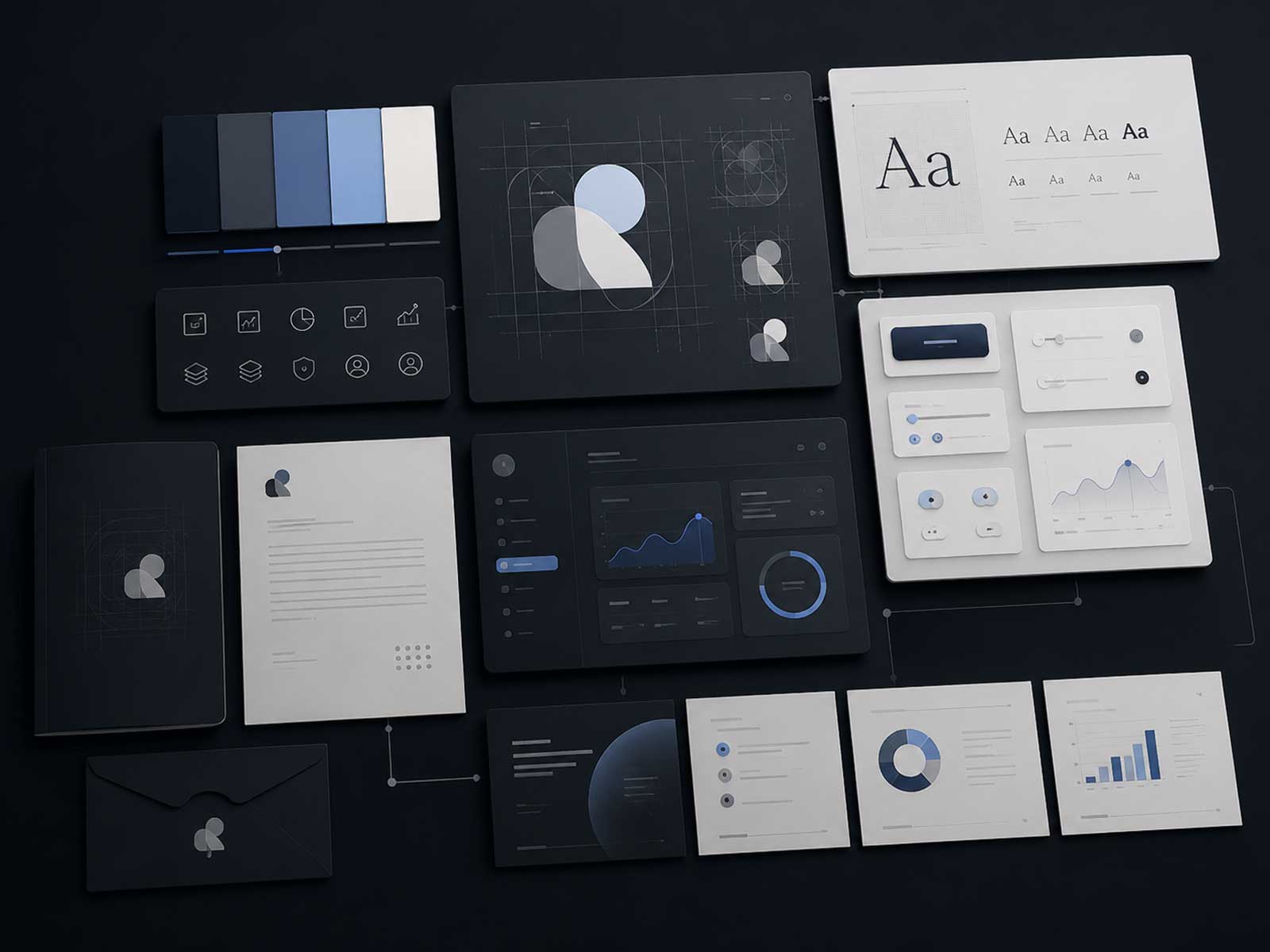
What a Scalable SaaS Identity System Concretely Includes
Product-logo rules
How the mark behaves within product interfaces, marketing pages and external communication.
Feature iconography
A consistent icon language that prevents every new product feature from introducing visual drift.
Interface colour usage
Rules for applying brand colour to actions, states, alerts and data visualisation without conflicting with product usability.
Launch graphics
Reusable structures for feature announcements, campaigns and release communication.
Sales-deck templates
Master layouts that sales and customer-success teams can update without redesigning presentations each time.
Documentation styling
Visual standards for help centres, changelogs, technical documentation and customer education.
Governance rules
Clear guidance on what internal teams may adapt, what should remain fixed and how new materials should extend the system.
A connected identity system is not simply a logo and colour palette. It is a documented set of rules and reusable assets that a team can apply without commissioning new design work for every surface.
FAQ
Frequently asked questions
Practical answers for SaaS teams evaluating brand and website scope.
Before a funding round, major go-to-market push or when the product interface, marketing website and sales materials no longer appear to belong to the same company.
Yes. The logo is only one component. Positioning, typography, colour-to-interface mapping and governance rules are what support consistent application as the company grows.
Yes. Most engagements work alongside the existing interface. A broader UI redesign is included only when separately agreed within scope.
Not always. Early-stage teams often need the Focused scope rather than every item described on this page. We will explain honestly what is useful now and what can wait.
Yes. Those can be included within an Integrated engagement when identity work needs to be applied to real communication surfaces.
That is a common starting point. Existing materials are useful but not mandatory.
Need Clearer SaaS Brand Communication Before Scaling?
Tell us your product category, current growth stage and where communication is breaking down across product, sales or marketing. We will help determine whether you need a focused identity project or something broader.